
PaychainX and the Future of Retail Stablecoin Checkout Infrastructure

Why Dual-Rail Financial Systems Are Transforming Retail Payments and Merchant Commerce

Retail commerce is entering a new infrastructure era.
For decades, merchants relied almost entirely on:
card networks
acquiring banks
processors
ACH systems
regional settlement providers
These systems built modern commerce.
But they were also designed around:
delayed settlement
fragmented treasury systems
high intermediary costs
banking-hour dependencies
limited programmability
Modern commerce increasingly requires:
real-time settlement
programmable liquidity
global payment interoperability
AI-native execution systems
digital asset settlement
stablecoin-enabled checkout infrastructure
This is driving the rise of:
dual-rail retail financial infrastructure.
And PaychainX is positioning directly within that transition.
The Evolution of Merchant Checkout Infrastructure
Traditional merchant checkout systems were built primarily for:
card acceptance
authorization routing
processor connectivity
settlement coordination
But the future retail stack requires much more.
Modern merchants increasingly demand:
faster settlement
lower payment friction
stablecoin interoperability
treasury automation
global checkout flexibility
programmable financial infrastructure
This creates the need for:
intelligent payment orchestration infrastructure.
Why Stablecoin Checkout Matters
Stablecoins are rapidly becoming operational financial infrastructure.
They enable:
near real-time settlement
programmable payments
API-native financial execution
global liquidity movement
digital treasury coordination
For merchants, stablecoin checkout introduces:
faster settlement cycles
potential cost optimization
programmable commerce systems
improved treasury flexibility
continuous settlement environments
This fundamentally changes the economics of retail payments.
The Rise of Dual-Rail Checkout Systems
The future of retail payments is not:traditional finance versus digital assets.
The future is:
orchestration between both systems.
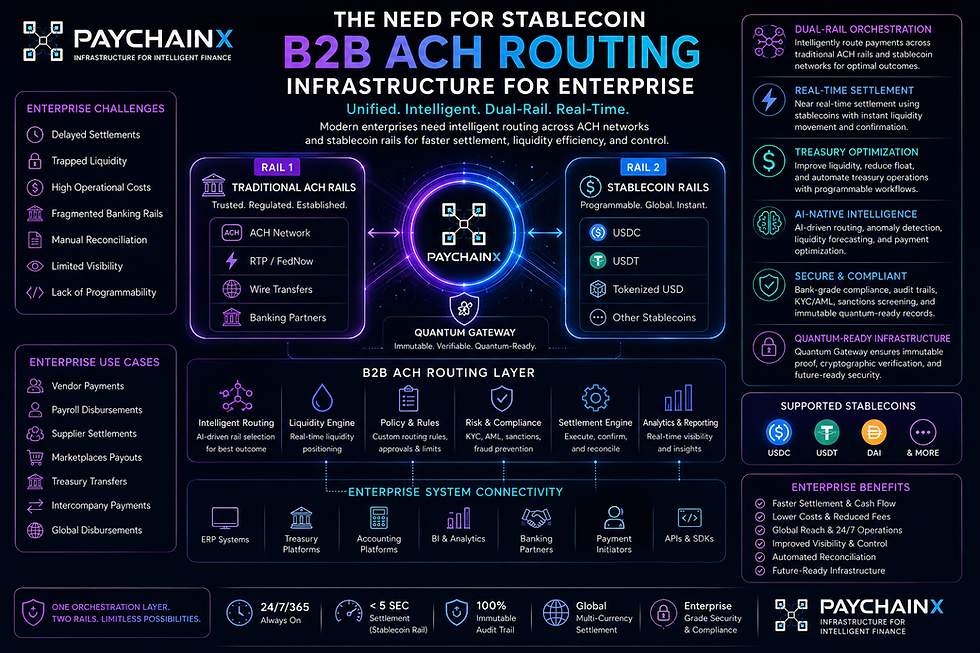
Dual-rail infrastructure enables merchants to operate across:
traditional banking rails
and
stablecoin settlement rails
simultaneously.
This allows checkout systems to intelligently coordinate:
card payments
banking settlement
stablecoin liquidity
treasury movement
digital settlement
AI-native orchestration
through one infrastructure layer.
What PaychainX Is Building
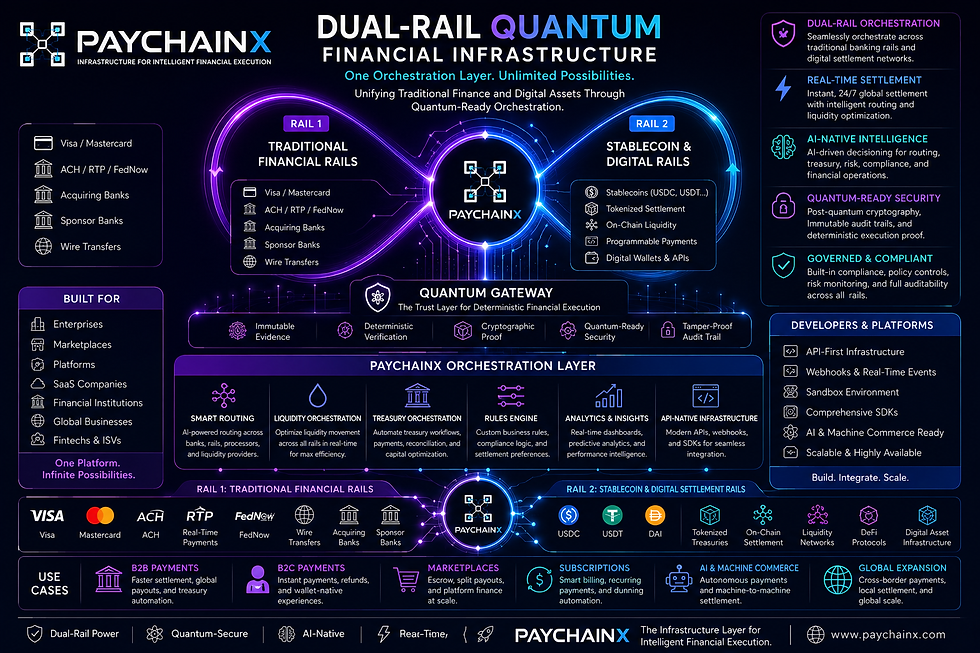
PaychainX is being architected as:
dual-rail financial orchestration infrastructure
designed to unify:
traditional payment rails
stablecoin settlement systems
merchant checkout infrastructure
treasury orchestration
programmable finance
AI-native commerce
real-time financial execution
through one intelligent platform.
The Role of Zero Hash-Style Settlement Rails
Modern stablecoin infrastructure providers are helping bridge:
digital assets
regulated financial systems
treasury operations
settlement infrastructure
This creates the foundation for:
retail stablecoin commerce.
Through dual-rail orchestration, merchants can increasingly support:
traditional checkout systems
stablecoin settlement options
programmable treasury coordination
digital asset interoperability
without replacing existing commerce infrastructure.
Why Merchants Want Faster Settlement
Settlement timing directly impacts:
merchant cash flow
treasury efficiency
operational liquidity
working capital flexibility
Traditional settlement may require:
overnight windows
banking cutoffs
processor coordination
delayed treasury movement
Stablecoin infrastructure enables:
near real-time movement of value
continuous settlement environments
programmable treasury coordination
This dramatically improves operational flexibility.
AI and Intelligent Checkout Infrastructure
Artificial intelligence is also transforming retail financial infrastructure.
AI systems increasingly assist with:
routing optimization
payment intelligence
fraud analysis
treasury forecasting
liquidity coordination
settlement optimization
This creates demand for:
AI-native financial orchestration systems.
The Quantum Gateway Model
The PaychainX Quantum Gateway introduces:
immutable transaction evidence
deterministic execution verification
cryptographic audit infrastructure
quantum-ready settlement architecture
governed financial execution
This creates infrastructure capable of supporting:
real-time merchant settlement
programmable checkout systems
AI-native commerce
stablecoin interoperability
future retail financial infrastructure
Why Infrastructure Leadership Matters
Historically, infrastructure leaders became foundational to entire industries.
Examples include:
cloud providers
payment networks
operating systems
API platforms
financial processors
In commerce, orchestration infrastructure may become one of the defining operational layers of next-generation retail finance.
The Future Retail Financial Stack
The next-generation retail payment stack will increasingly become:
dual-rail
programmable
interoperable
AI-native
stablecoin-enabled
real-time
quantum-ready
The orchestration layer becomes the operational intelligence system connecting:
merchants
banking rails
stablecoin settlement
treasury systems
programmable finance
autonomous commerce
Conclusion
Retail commerce is entering a major infrastructure transition.
The future of checkout systems will increasingly require:
dual-rail settlement
stablecoin interoperability
real-time liquidity movement
AI-native orchestration
programmable treasury systems
quantum-ready infrastructure
The platforms that successfully coordinate these systems may ultimately define the next generation of global retail commerce.
PaychainX is building toward that future.
Not simply as a payment gateway.
But as:

Comments